
DevOps Platform Engineering is Transforming Modern Software Delivery — Why 2025 Belongs to Platform
DevOps Platform Engineering is reshaping modern software delivery in 2025 with AI-driven automation, Kubernetes GitOps workflows, platform teams, and faster developer productivity across enterprises worldwide.
ALLTECH NEWSDEVOPSAI/ML
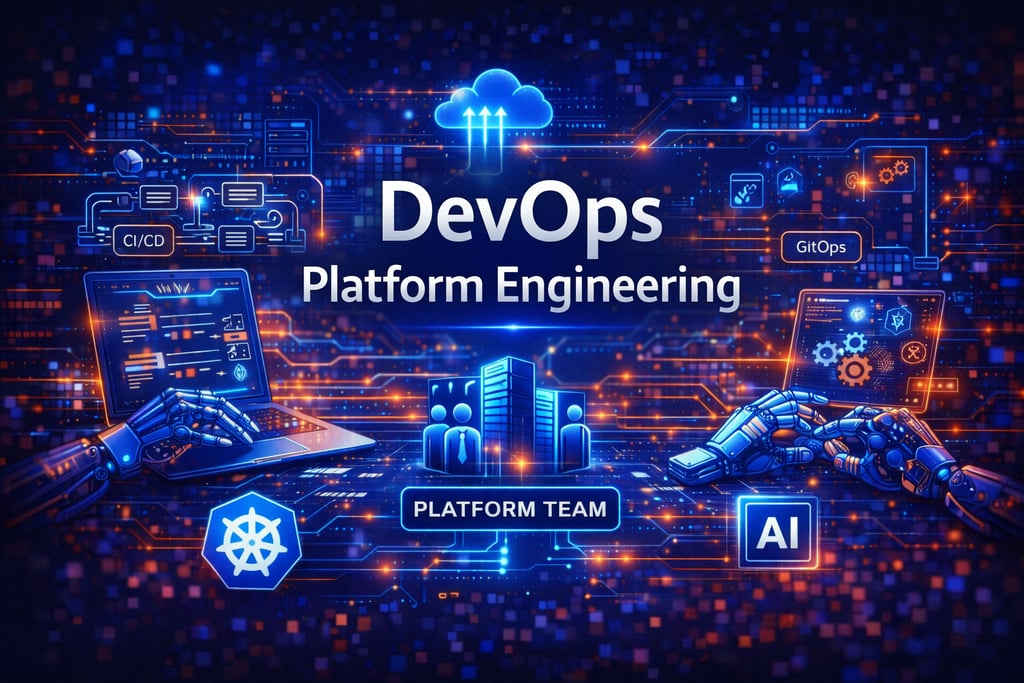
Over the past few years, DevOps has evolved from a culture and collaboration movement into a sophisticated ecosystem of tools, automation practices, and engineering disciplines. But in 2025, one theme is clearly dominating tech conversations — DevOps Platform Engineering.
Organizations across fintech, SaaS, e-commerce, gaming, and enterprise IT are rapidly shifting from “tool-sprawl DevOps” toward centralized platform teams, reusable pipelines, golden environments, and self-service delivery workflows. Instead of every team reinventing DevOps processes, companies are building internal developer platforms (IDPs) that standardize deployments, security, observability, and infrastructure automation.
And this shift isn’t just operational — it’s becoming one of the top-trending DevOps transformations globally.
Why DevOps Platform Engineering is Trending Now
In traditional DevOps adoption, each development squad assembled its own CI/CD pipelines, Kubernetes clusters, monitoring stack, and release workflows. While flexible, this led to:
duplicated infrastructure efforts
inconsistent deployment standards
security gaps between teams
increased cognitive load for developers
rising cloud & tooling costs
Platform Engineering solves these challenges by creating a centralized product — the internal platform that developers use to build, test, deploy, and operate applications.
Instead of DevOps being a set of scripts and tools, it becomes:
a curated experience
a governed ecosystem
a shared delivery backbone across teams
This shift is powerful because it brings together four critical forces:
Developer productivity
Security and governance
Cost optimization (FinOps)
Reliability at scale
And when paired with AI-driven CI/CD automation and Kubernetes GitOps best practices, the impact becomes transformational.
AI-Driven Automation is Becoming the New DevOps Co-Pilot
Another major trend reshaping DevOps in 2025 is the rapid rise of AI-powered delivery workflows.
Teams are now using AI to:
auto-analyze failed builds
recommend pipeline optimizations
detect flaky tests
predict deployment risk
identify misconfigurations before production
generate observability insights faster
Instead of DevOps engineers manually debugging pipelines for hours, AI tools can surface the root cause within seconds.
In modern internal platforms, AI is helping to:
create deployment templates
auto-document infrastructure changes
streamline incident investigation
identify performance regressions early
support SRE reliability goals
This allows platform teams to focus less on firefighting and more on continuous improvement & developer enablement.
Kubernetes + GitOps = The Backbone of Platform Engineering
Kubernetes remains at the heart of cloud-native DevOps — but how it’s managed has changed significantly.
Instead of manually applying manifests or running ad-hoc deployments, more organizations are embracing GitOps workflows, where:
Git becomes the single source of truth
deployments are automated through pull requests
environment drift is eliminated
rollbacks are predictable and safer
audit logs are built-in by design
GitOps perfectly aligns with Platform Engineering because:
it scales across multiple environments
works for microservices & monoliths
supports compliance & governance
simplifies disaster recovery
reduces manual risk-prone operations
It also creates a more developer-friendly experience — developers ship code through familiar Git workflows while the platform ensures consistency, reliability, and guardrails.
Why Enterprises Are Prioritizing Platform Teams in 2025
Across industries, the business motivation for Platform Engineering is clear:
📉 reduced cognitive load on developers
🚀 faster onboarding & delivery cycles
🔐 improved security posture
💰 better cloud cost visibility
⚙️ standardized infrastructure & tooling
Instead of developers becoming accidental DevOps engineers, platform teams provide:
golden pipelines
reusable environment templates
pre-approved security patterns
self-service provisioning
one-click deployments
This allows product teams to focus on shipping value, not managing tooling complexity.
Platform Engineering Does NOT Replace DevOps — It Evolves It
A common misconception is that Platform Engineering replaces DevOps — but in reality, it extends and matures it.
DevOps set the foundation:
shared responsibility
automation mindset
culture of collaboration
Platform Engineering builds structure around that culture:
product thinking applied to infrastructure
consistent developer experience
scalable & governed delivery models
The result is a future where:
DevOps engineers become platform product engineers
developers work in intuitive self-service environments
AI handles repetitive operations
GitOps manages state & change reliability
This is why DevOps Platform Engineering is one of the most viral and influential tech trends of 2025.
What Comes Next in the DevOps Evolution?
Looking ahead, expect to see:
deeper AI integration across CI/CD & observability
stronger collaboration between SRE & platform teams
FinOps + DevOps alignment for cloud spend optimization
secure-by-default golden pipelines
wider adoption of internal developer portals
The future of DevOps isn’t just about tools — it’s about creating a friction-free developer experience that scales with innovation.
And Platform Engineering is leading that evolution.